{
"$type": "site.standard.document",
"content": {
"$type": "at.markpub.markdown",
"flavor": "gfm",
"text": {
"$type": "at.markpub.text",
"markdown": "#### Inside the Room of Tezos X\n\n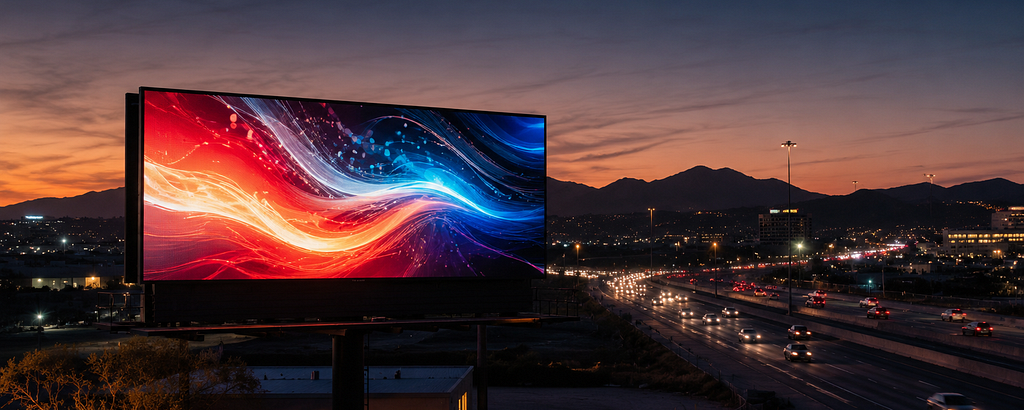\n\nA large glowing digital billboard beside a Phoenix freeway at dusk, with traffic moving toward the mountains in the distance.\n\nThe 17 at night isn’t quiet.\n\nElectronic billboards glow over the lanes with faces too clean for the road around them. Some signs change just late enough that you catch the wrong half of the message. Some try to sell you a lawsuit, a house, a way out, a way up, a way to make money. Some are just a giant face with a name you already know because the jingle got into your head years ago and never left.\n\nCall Rafi.\n\nYou don’t even need the whole ad anymore. The face does half the work. The phrase does the rest. Annoying, expensive, ridiculous, effective.\n\nThen there are the older signs. Smirking lawyers under yellow sodium lights. Phone numbers large enough to hit you through the windshield. Claims stacked on top of claims, as if anyone doing 65 in the right lane is going to pull over, read the fine print, and make an informed decision before the next exit.\n\nA billboard doesn’t get much from you. A blink. Maybe two. Maybe a passenger has time to stare, but the driver is already past it.\n\nOne face. One phrase. One number. One feeling.\n\nIt’s why so many signs look worse once you’re close enough to actually read them. Up close, the message feels too blunt. Too loud. Too simple. On the road, that’s the whole point.\n\nThe sign gets one clean swing at your attention before you’re gone.\n\nA driver isn’t a reader. A driver is a moving target.\n\nThe passenger might catch the smaller line under the giant face. They might notice the weird electronic ad with no logo and wonder who paid for it. They might have time to ask what the hell that was supposed to mean.\n\nThe driver gets pieces.\n\nBrake lights. Lane changes. Someone drifting over the line. A work truck loaded wrong. Construction cones. The radio. The half-second where the sign changes and all you catch is a face, a number, a color, maybe three words that stay in your head for no good reason.\n\nSo the sign cheats. It has to.\n\nBig face. Big word. Big number. Bright color. Something blunt enough to survive the real distractions and still be there later when you didn’t ask for it.\n\nA billboard can make something stick. It can get a name lodged in your head. It can make a place feel familiar before you’ve ever been there.\n\nIt can’t show whether anything worth finding is waiting after you take the exit.\n\nEvery now and then, the sign does almost nothing for the place.\n\nNo glow. No giant reminder. No promise trying to crawl into your skull while you’re changing lanes. Just a small burger joint you probably would have walked past if someone hadn’t bumped into you on the way out and happened to mention it was the best burger in town.\n\nThat sounded ridiculous.\n\nThe place didn’t help his case. Five tables. Maybe twenty chairs total. A bar with no alcohol. Five things on the menu. Prices that looked normal enough to be suspicious. Nothing on the wall trying to convince you that you’d found something special.\n\nIt looked like the kind of place people politely call “solid.”\n\nThen the burger showed up.\n\nThat’s the part the sign couldn’t do. The room couldn’t do it either. The menu didn’t do it. The stranger could point, but he couldn’t make the place true for you.\n\nThe guy outside warned me how good it was going to be, but that was never going to be enough. The first bite had to do that.\n\nThe outside didn’t lie to you.\n\nThe little sign didn’t oversell the place. The room didn’t pretend to be impressive. The menu didn’t dress itself up. Your first read made sense with what you had in front of you.\n\nIt just wasn’t enough.\n\nThe sign could tell you where the door was. The room could tell you how plain the place looked. The menu could tell you what they were willing to make.\n\nThe burger had to tell you whether any of it was worth caring about.\n\nTezos can feel like that from the outside.\n\nIt can look plain, quiet, technical, or hard to read. Sometimes the public language doesn’t give people much to grab onto. Sometimes it feels like standing outside that burger place, looking at the little sign and trying to decide from there.\n\nBut the sign was never the thing.\n\nThe part worth understanding sits further in. It shows up in the architecture, the upgrade process, the systems people keep maintaining, and the years of choices that don’t fit cleanly on a billboard.\n\nThe outside can get someone to stop or walk in.\n\nIt just can’t judge the whole thing for them.\n\nA billboard wants one clean handle. One thing to remember. One phrase that survives the drive.\n\nTezos X doesn’t fit that cleanly.\n\nYou can say faster, but faster misses the shape of the work.\n\nYou can say rollups, but rollups don’t explain the upgrade process around them.\n\nYou can say Etherlink, but Etherlink is one part of a larger direction.\n\nYou can say modular, but modular can sound like a pile of disconnected parts. The point is closer to the opposite: different pieces doing different jobs so the whole experience can feel simpler from the user side.\n\nThe short version keeps cutting into the machinery.\n\nThe pieces start to work when they connect. Tezos X points at protocol upgrades, rollups, data availability, bakers, governance, and Etherlink, but none of those words can carry the whole thing alone. Each one is a door into the larger system.\n\nThat’s too much for a billboard. Cutting it down too far makes it sound smaller than it is.\n\nThe outside can point. It can give you a phrase. It can tell you there is a door.\n\nBut the thing itself only starts making sense when you walk further in.\n\nThen you see things that were already there.\n\n[Tezos has a public route for protocol upgrades](https://docs.tezos.com/architecture/governance). Changes can be proposed, tested, voted on, and activated through the protocol itself. That kind of public change path is part of why Tezos X fits Tezos instead of sitting beside it.\n\nThen [rollups](https://docs.tezos.com/architecture/smart-rollups) make more sense. They help heavier work move away from the base layer while staying connected to the larger system.\n\nThen the [DAL](https://docs.tezos.com/architecture/data-availability-layer) starts to look less like an extra piece and more like plumbing. If rollups are going to carry more work, the data from that work needs somewhere to go. From the outside, that sounds dry. Inside the room, it starts to look like part of what the room was built to handle.\n\n[Bakers](https://docs.tezos.com/architecture/bakers) fit there too. They keep the larger system tied back to Tezos instead of letting every new piece drift into its own separate corner.\n\n[Etherlink](https://docs.etherlink.com/) fits into the same view. From the outside, it is easy to flatten Etherlink into “the EVM thing.” That label helps, but it doesn’t carry the whole picture. Etherlink gives Ethereum-style users and tools a way in while still sitting inside the larger Tezos direction.\n\nThe room doesn’t feel improvised.\n\nIt feels like choices have been stacking in this direction for years.\n\nFrom the outside, [Tezos X](https://tezos.com/tezos-x/) can sound like another roadmap. Another phrase. Another attempt to tell people where the chain is headed.\n\nInside the room, it reads differently.\n\nThe amendment process already had history behind it. Rollups already had a place in the larger design. The DAL already answered a real pressure around rollups. Etherlink already gave EVM users a way in. Bakers already had a role tying the system back to Tezos.\n\nThat is the first-bite moment.\n\nThe quality isn’t in one ingredient. It’s in the way the whole thing starts to make sense together.\n\nTezos X is pointing at that room, not decorating it.\n\nThat doesn’t mean the outcome is automatic. A good kitchen still has to keep cooking. The work still has to keep proving itself.\n\nThe sign still matters. It always mattered. Without it, most people never know there’s even a door to walk through.\n\nA billboard can put a name in someone’s head. A phrase can give them something to search. A public message can make someone stop long enough to wonder what is behind it.\n\nBut the sign will always be smaller than the thing.\n\nIt can’t carry the room. It can’t carry the years of choices behind it. It can’t carry the feeling of walking in and realizing the pieces were already there.\n\nThe sign can point.\n\nThe room has to prove it.\n\nThe sign gets one more second.\n\nThe architecture is why they stay.\n\n\n\n* * *\n\n[The Sign Was Never the Thing](https://news.tezoscommons.org/the-sign-was-never-the-thing-be77e5c4577c) was originally published in [Tezos Commons](https://news.tezoscommons.org) on Medium, where people are continuing the conversation by highlighting and responding to this story."
}
},
"contributors": [
{
"did": "did:plc:x5l5nezabpz5sre6db2lhevk",
"displayName": "Blangs",
"role": "author"
}
],
"description": "The 17 at night isn’t quiet.",
"path": "/2026/07/02/the-sign-was-never-the-thing-suslkb",
"publishedAt": "2026-07-02T22:12:21Z",
"site": "at://did:plc:g5gsxwj5oi2odrjrt3hyayot/site.standard.publication/3moo6jmztyi2g",
"tags": [
"blockchain",
"tezos",
"web3",
"blockchain-infrastructure",
"ethereum"
],
"textContent": "Inside the Room of Tezos X A large glowing digital billboard beside a Phoenix freeway at dusk, with traffic moving toward the mountains in the distance. The 17 at night isn’t quiet. Electronic billboards glow over the lanes with faces too clean for the road around them. Some signs change just late enough that you catch the wrong half of the message. Some try to sell you a lawsuit, a house, a way out, a way up, a way to make money. Some are just a giant face with a name you already know because the jingle got into your head years ago and never left. Call Rafi. You don’t even need the whole ad anymore. The face does half the work. The phrase does the rest. Annoying, expensive, ridiculous, effective. Then there are the older signs. Smirking lawyers under yellow sodium lights. Phone numbers large enough to hit you through the windshield. Claims stacked on top of claims, as if anyone doing 65 in the right lane is going to pull over, read the fine print, and make an informed decision before the next exit. A billboard doesn’t get much from you. A blink. Maybe two. Maybe a passenger has time to stare, but the driver is already past it. One face. One phrase. One number. One feeling. It’s why so many signs look worse once you’re close enough to actually read them. Up close, the message feels too blunt. Too loud. Too simple. On the road, that’s the whole point. The sign gets one clean swing at your attention before you’re gone. A driver isn’t a reader. A driver is a moving target. The passenger might catch the smaller line under the giant face. They might notice the weird electronic ad with no logo and wonder who paid for it. They might have time to ask what the hell that was supposed to mean. The driver gets pieces. Brake lights. Lane changes. Someone drifting over the line. A work truck loaded wrong. Construction cones. The radio. The half-second where the sign changes and all you catch is a face, a number, a color, maybe three words that stay in your head for no good reason. So the sign cheats. It has to. Big face. Big word. Big number. Bright color. Something blunt enough to survive the real distractions and still be there later when you didn’t ask for it. A billboard can make something stick. It can get a name lodged in your head. It can make a place feel familiar before you’ve ever been there. It can’t show whether anything worth finding is waiting after you take the exit. Every now and then, the sign does almost nothing for the place. No glow. No giant reminder. No promise trying to crawl into your skull while you’re changing lanes. Just a small burger joint you probably would have walked past if someone hadn’t bumped into you on the way out and happened to mention it was the best burger in town. That sounded ridiculous. The place didn’t help his case. Five tables. Maybe twenty chairs total. A bar with no alcohol. Five things on the menu. Prices that looked normal enough to be suspicious. Nothing on the wall trying to convince you that you’d found something special. It looked like the kind of place people politely call “solid.” Then the burger showed up. That’s the part the sign couldn’t do. The room couldn’t do it either. The menu didn’t do it. The stranger could point, but he couldn’t make the place true for you. The guy outside warned me how good it was going to be, but that was never going to be enough. The first bite had to do that. The outside didn’t lie to you. The little sign didn’t oversell the place. The room didn’t pretend to be impressive. The menu didn’t dress itself up. Your first read made sense with what you had in front of you. It just wasn’t enough. The sign could tell you where the door was. The room could tell you how plain the place looked. The menu could tell you what they were willing to make. The burger had to tell you whether any of it was worth caring about. Tezos can feel like that from the outside. It can look plain, quiet, technical, or hard to read. Sometimes the public language doesn’t give people much to grab onto. Sometimes it feels like standing outside that burger place, looking at the little sign and trying to decide from there. But the sign was never the thing. The part worth understanding sits further in. It shows up in the architecture, the upgrade process, the systems people keep maintaining, and the years of choices that don’t fit cleanly on a billboard. The outside can get someone to stop or walk in. It just can’t judge the whole thing for them. A billboard wants one clean handle. One thing to remember. One phrase that survives the drive. Tezos X doesn’t fit that cleanly. You can say faster, but faster misses the shape of the work. You can say rollups, but rollups don’t explain the upgrade process around them. You can say Etherlink, but Etherlink is one part of a larger direction. You can say modular, but modular can sound like a pile of disconnected parts. The point is closer to the opposite: different pieces doing different jobs so the whole experience can feel simpler from the user side. The short version keeps cutting into the machinery. The pieces start to work when they connect. Tezos X points at protocol upgrades, rollups, data availability, bakers, governance, and Etherlink, but none of those words can carry the whole thing alone. Each one is a door into the larger system. That’s too much for a billboard. Cutting it down too far makes it sound smaller than it is. The outside can point. It can give you a phrase. It can tell you there is a door. But the thing itself only starts making sense when you walk further in. Then you see things that were already there. Tezos has a public route for protocol upgrades . Changes can be proposed, tested, voted on, and activated through the protocol itself. That kind of public change path is part of why Tezos X fits Tezos instead of sitting beside it. Then rollups make more sense. They help heavier work move away from the base layer while staying connected to the larger system. Then the DAL starts to look less like an extra piece and more like plumbing. If rollups are going to carry more work, the data from that work needs somewhere to go. From the outside, that sounds dry. Inside the room, it starts to look like part of what the room was built to handle. Bakers fit there too. They keep the larger system tied back to Tezos instead of letting every new piece drift into its own separate corner. Etherlink fits into the same view. From the outside, it is easy to flatten Etherlink into “the EVM thing.” That label helps, but it doesn’t carry the whole picture. Etherlink gives Ethereum-style users and tools a way in while still sitting inside the larger Tezos direction. The room doesn’t feel improvised. It feels like choices have been stacking in this direction for years. From the outside, Tezos X can sound like another roadmap. Another phrase. Another attempt to tell people where the chain is headed. Inside the room, it reads differently. The amendment process already had history behind it. Rollups already had a place in the larger design. The DAL already answered a real pressure around rollups. Etherlink already gave EVM users a way in. Bakers already had a role tying the system back to Tezos. That is the first-bite moment. The quality isn’t in one ingredient. It’s in the way the whole thing starts to make sense together. Tezos X is pointing at that room, not decorating it. That doesn’t mean the outcome is automatic. A good kitchen still has to keep cooking. The work still has to keep proving itself. The sign still matters. It always mattered. Without it, most people never know there’s even a door to walk through. A billboard can put a name in someone’s head. A phrase can give them something to search. A public message can make someone stop long enough to wonder what is behind it. But the sign will always be smaller than the thing. It can’t carry the room. It can’t carry the years of choices behind it. It can’t carry the feeling of walking in and realizing the pieces were already there. The sign can point. The room has to prove it. The sign gets one more second. The architecture is why they stay. The Sign Was Never the Thing was originally published in Tezos Commons on Medium, where people are continuing the conversation by highlighting and responding to this story.",
"title": "The Sign Was Never the Thing",
"updatedAt": "2026-07-02T22:12:21Z"
}